Rome in 48 Hours: A First-Timer's Walking Itinerary That Avoids the Crowds
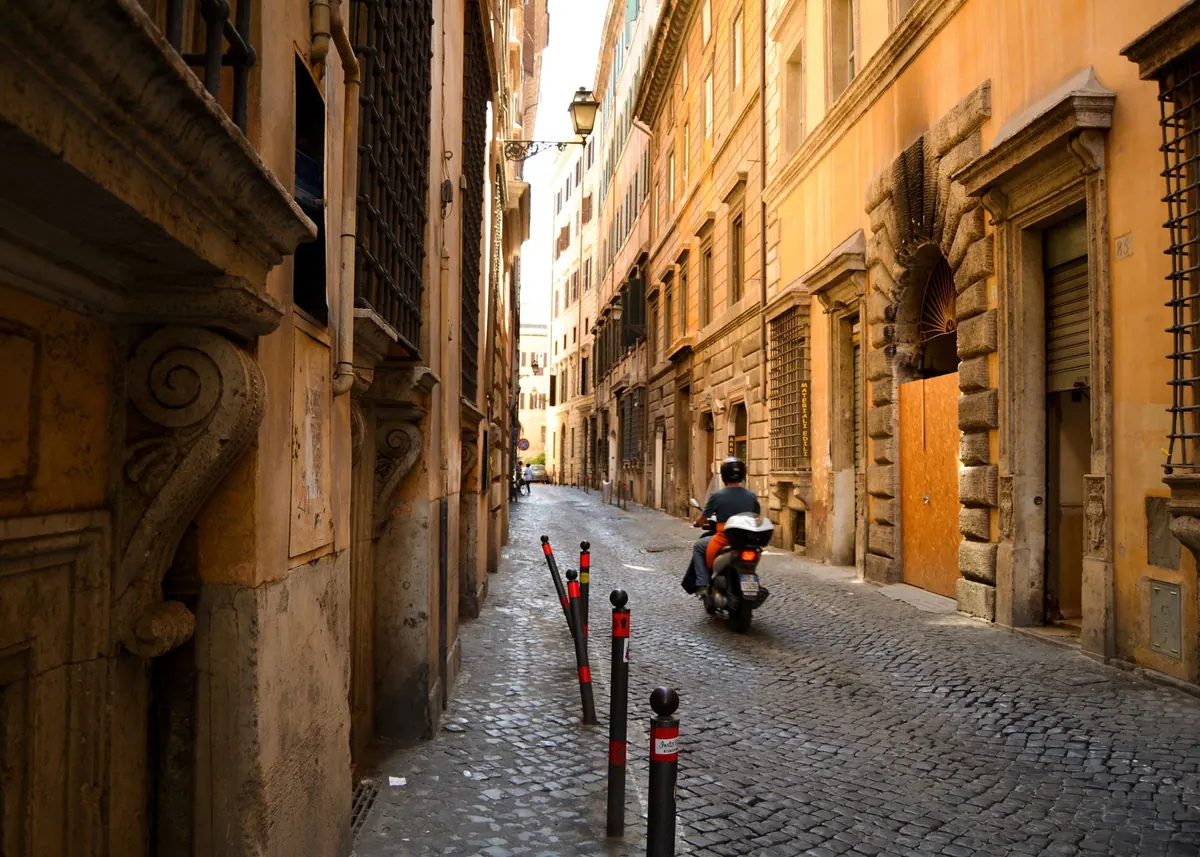
Two days is not enough for Rome. Pretending otherwise is the first mistake; the second is trying to cover the city from the back seat of a taxi. Almost everything a first-timer wants to see — the Colosseum, the Forum, the Pantheon, Piazza Navona, Trastevere — sits within roughly four kilometres of itself, which means your own feet are the fastest way between them, and often the only way to find the streets everyone else walks straight past.
This plan front-loads the famous sights into the early morning, while the coach parties are still at breakfast, then spends the crowded middle of the day on hills, in churches and along side streets where the noise drops away. You will walk a lot. That is rather the point.
How this itinerary works
Day one stays east and south of the centre: the Colosseum, Monti, the Aventine and Testaccio. Day two crosses the river into Trastevere, climbs the Janiculum, and returns to the historic centre in the evening when the day-trippers have gone. Expect eight to ten kilometres a day on cobblestones, so wear shoes you already trust rather than the pair you bought at the airport.
Two things are fixed: your timed entries, and a real rest between about 13:00 and 15:00, when the sun and the queues are at their worst. Everything else bends around them.
Day One: the Colosseum, Monti and the Aventine
07:30 — the Colosseum from outside, then straight in
Arrive before your slot and walk the exterior first, up Via di San Giovanni in Laterano and back, because the amphitheatre is at its most photogenic in low morning light and the pavement is nearly empty. Book the first entry of the day. The combined Colosseum–Forum–Palatine ticket is generally valid for 24 hours from first use, so don't plan to split it across both days; confirm the conditions when you book, and buy only through the official ticket office, not from anyone who approaches you in the street.
10:00 — San Clemente and the lanes of Monti
Ten minutes uphill, the Basilica di San Clemente stacks three cities on top of each other: a 12th-century church, a 4th-century one beneath it, and below that a Roman street with a spring still running through it. The lower levels charge a small admission and stay blissfully cool. Then drift into Monti — Piazza della Madonna dei Monti, Via Urbana, Via dei Serpenti — and take a coffee standing at the bar like everyone else.
13:00 — lunch, then the quiet side of the Aventine
After eating, walk off the pasta through the Villa Celimontana gardens and continue south-west to the Aventine. Santa Sabina, a fifth-century basilica with orange trees in the courtyard and almost no visitors, is followed by the Giardino degli Aranci and the famous keyhole on Piazza dei Cavalieri di Malta. Yes, you queue — but for three or four people, not forty.
Carry on down to Testaccio, where the covered market is the place to assemble a picnic (mornings, Monday to Saturday). If you want a genuinely peaceful hour, the Protestant Cemetery beside the Pyramid of Cestius is one of the calmest corners in the city; it asks for a small donation and keeps limited hours.
19:30 — evening in Testaccio
Romans come here to eat, and the trattorias fill up. Book ahead for Thursday to Saturday, or eat early and walk back along the river, which is lovely after dark.
Day Two: Trastevere, the Janiculum and the evening centre
07:15 — the Pantheon and its backstreets
The Pantheon now requires a ticket, so take the earliest slot and you get Piazza della Rotonda almost to yourself. Before the crowds arrive, step into Santa Maria sopra Minerva around the corner — Michelangelo's Christ, Bernini's elephant — and then Sant'Ignazio, whose painted ceiling is the best free trick in Rome. Churches generally close for a few hours around midday and expect covered shoulders and knees.
09:30 — Campo de' Fiori, the Ghetto, across the river
Cut through the market on Campo de' Fiori, then follow the Via del Portico d'Ottavia past the Teatro di Marcello, cross Tiber Island on the Ponte Fabricio, and you are in Trastevere without having used a bus.
11:30 — up to the Janiculum
See Santa Maria in Trastevere first, then climb. The Salita di Sant'Onofrio is the gentler route; Via Garibaldi is more direct. At the top, San Pietro in Montorio holds Bramante's Tempietto, a small round temple usually mistaken for a shed from outside and perfect within. Continue to the Fontana dell'Acqua Paola for the wide view, and if you are there at noon, the cannon at Porta San Pancrazio fires a blank round. Descend for lunch.
16:00 — the centre without the crush
Cross back over the Ponte Sisto and wander the Piazza Navona area, then head for the Quattro Fontane crossroads and the Moses Fountain on Via del Quirinale — the kind of monumental baroque you get to yourself. Save the Trevi for after 22:00 or skip it entirely; the Acqua Paola you saw that morning is the same idea with a better view and no elbows.
What to book, and in what order
- Colosseum, Forum and Palatine: first slot of the day, booked as soon as your dates open.
- Vatican Museums: only if you are set on them. Take the first slot; they close on Sundays except the last of the month, when entry is free and the queues are punishing. St Peter's opens early and is calmest before 8:30.
- Galleria Borghese: timed two-hour slots, often gone weeks ahead.
- Pantheon: a timed ticket, best at opening.
- Domus Aurea: guided visits at weekends, released in batches — check the official site.
Use official booking sites. Resellers charge a margin for the same ticket and complicate any changes.
Eating and resting without losing an afternoon
Book dinner, don't hunt for it at 21:00 with tired legs. Lunch is the flexible meal: market food, a slice of pizza, or a bowl of pasta in a backstreet trattoria away from any menu with photographs on it. Sit down properly once a day. Drink from the free nasoni fountains on street corners — the water is fine and cold — and carry a refillable bottle.
Practical notes
Large backpacks are refused at the Colosseum, so travel light. Carry your tickets on your phone and a little cash for church crypts and small bars. Cobblestones are slippery after rain and unforgiving in thin soles. And leave one thing undone: the reason first-timers come back is usually the church they skipped, the street they didn't turn down, the hour they spent sitting on a wall instead of queuing.
Photo: Mert Çelik / Pexels