How to Choose a Base for a Dolomites Hiking Trip: Towns, Access, and Day-Trip Options
The Dolomites are less a single mountain range than a constellation of valleys, and the valley you sleep in decides what your days look like. A base ten minutes from a cable car and a trailhead is a different holiday from one that costs you an hour of driving before every hike. Almost every gateway town here is handsome, which makes the choice harder rather than easier. What follows is a comparison by access, scenery and hiking level, so you can pick the one that fits the walking you actually plan to do.
Measure a Base in Minutes to the Trailhead
On a map, half the hotels in the Dolomites look close to the mountains. On the ground, mountain roads are slow: hairpins, 30 km/h limits, vans full of cyclists. Passo Falzarego, Passo Gardena and Passo Pordoi are wonderful places to arrive at and tedious places to commute over twice a day.
A better method than judging by distance is to list three or four hikes you genuinely want to do, then draw a thirty-minute circle around each trailhead. Where those circles overlap is your base. Do this before you book, not after.
Cable cars change the arithmetic completely. The Seceda lift rises straight out of Ortisei; Col Rodella leaves from Campitello; the Sass Pordoi lift puts you at 2,950 metres in a few minutes from the pass. But lifts have short seasons: many close in mid-October, and some pause in early summer for maintenance. Check the dates for your specific week before you build an itinerary around a ride.
Cortina d'Ampezzo: Big Scenery, Spread-Out Logistics
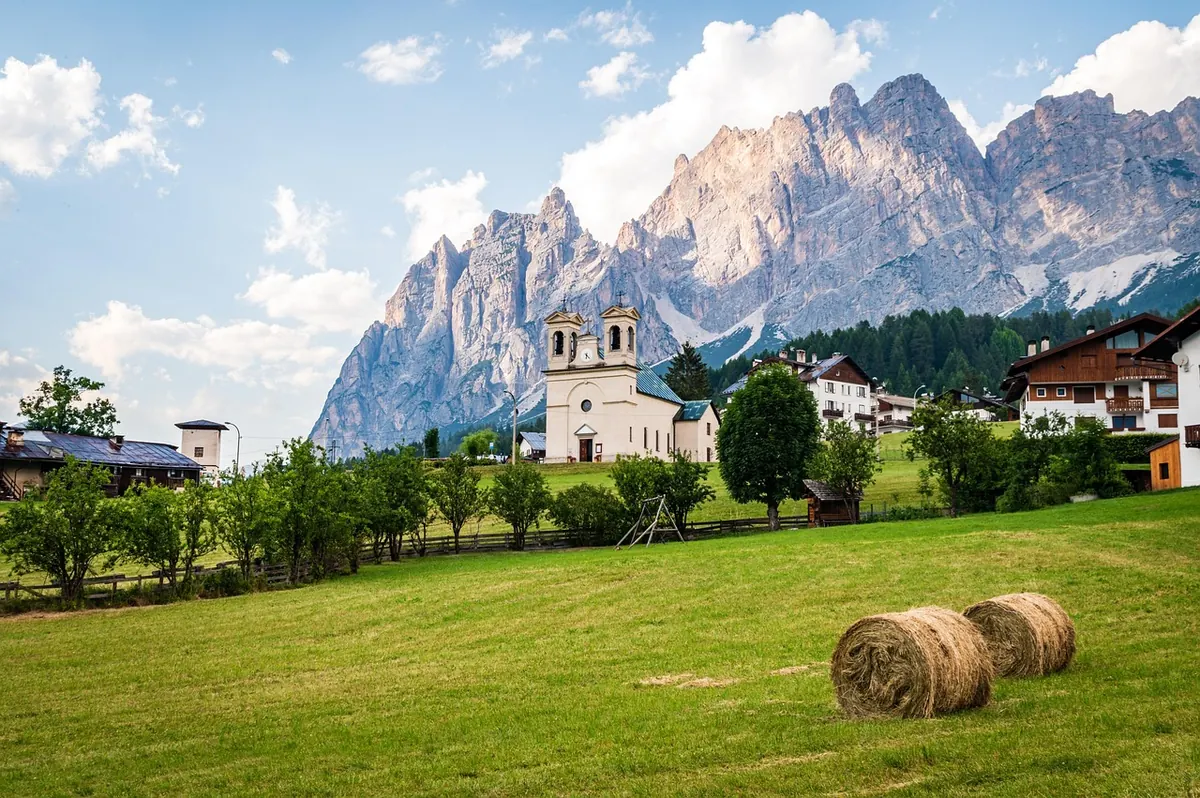
Cortina is the classic eastern base, ringed by the Tofane, Cristallo and Sorapiss, and it gives you the most famous set pieces in the range: the Tre Cime di Lavaredo circuit, the tunnels and trenches above Passo Falzarego, the Cinque Torri, the Croda da Lago loop past Lago Federa.
The catch is that those trailheads sit in different directions from town. The Tre Cime road from Misurina is tolled and the car park at Rifugio Auronzo fills early; Lago Federa and the Falzarego area are each a drive away. Cortina rewards a car, or patience with the local buses. It also suits hikers who want variety and don't mind a 6 a.m. start. Note that the run-up to the 2026 Winter Olympics brought roadworks and building sites to the valley — check current conditions before assuming a quiet drive.
Val Gardena and Val Badia: The Sella Ring
Ortisei, Santa Cristina, Selva
Val Gardena is the most convenient base in the Dolomites for hikers who want altitude without a car. Ortisei has a pedestrian centre, a lift to Seceda and buses to the Alpe di Siusi meadows; Selva sits under the Sella and the Sassolungo with the Ciampinoi lift on its edge. The Vallunga valley and the Puez-Odle plateaus are right there, and the buses between villages are frequent enough to plan a one-way walk.
Corvara, Colfosco, La Villa, San Cassiano
Over Passo Gardena, Val Badia is quieter, strongly Ladin, and just as well placed: the Puez-Odle trails, the Sassongher, the Lagazuoi cable car from Passo Falzarego, and the whole Sella Ronda circuit. Buses link the two valleys over the pass, so a mixed group can split up for the day and meet for dinner.
Alta Pusteria: The Quiet, Well-Connected Option
Dobbiaco, San Candido and Villabassa sit on a real railway line, with trains to Fortezza and onward to Bolzano, and a good local bus network. For families and hikers who prefer gentler grades, valley-floor paths and a village to wander in the evening, this is often the better choice than a lift-heavy resort.
You are also well placed for the northern side of the Tre Cime, the Fanes-Sennes-Braies park and the Landro valley. Lago di Braies is nearby but heavily managed in high season, with limited car access and shuttle buses from neighbouring villages — plan that visit like a timed appointment rather than a spontaneous detour.
Val di Fassa and the Trentino Side
Canazei, Campitello, Mazzin and Pozza di Fassa put you under the Catinaccio and the Sassolungo, with the Belvedere lift from Canazei and Col Rodella from Campitello. The Vajolet towers, the Rosengarten circuit and the Sella passes are all within easy reach, and the valley has a relaxed, Italian-speaking character that many walkers prefer to the busier Ladin resorts.
It is a strong base for the Sella Ronda in either direction, and slightly less good if your wish list is entirely eastern — the Tre Cime will cost you a long day.
Transport, Tolls and the Cable-Car Calendar
- Use the guest card. South Tyrol guest cards commonly include regional buses and trains; in Cortina and the Belluno province the arrangements differ, so ask at your accommodation what is actually covered.
- Decide on the car honestly. A car helps in Cortina and around Misurina; in Val Gardena and Alta Pusteria it can sit unused for a week.
- Expect tolls and full car parks. The Tre Cime approach road is tolled, and popular trailhead car parks fill by mid-morning in July and August.
- Book shuttles for the honeypots. Braies and the Tre Cime area both use timed access in peak season.
- Check lift dates. Late June and mid-October are the risky weeks for maintenance closures.
Which Base Fits Your Hiking Level
- First-timers and families: Alpe di Siusi from Ortisei or Siusi, Dobbiaco and San Candido, the easy loops around Passo Pordoi.
- Confident day hikers: Ortisei, Selva and Cortina, where 600-metre climbs and long ridge walks start from the door or a short bus ride.
- Via ferrata and big days: Cortina and Val Badia, with the Lagazuoi, Averau and Nuvolau terrain close at hand.
- Bad-weather flexibility: larger centres such as Brunico, Bolzano or Cortina, where a wet day still has museums, pools and shops.
A Practical Way to Decide
Write down your four must-do hikes. Mark the nearest trailhead for each. Choose the town that reaches at least three of them within half an hour, has a bus or lift you can rely on in your week, and offers something to do when the weather turns. Then book early — the best-placed rooms in Ortisei, Selva and Cortina go first for July and August.
If two bases are tied, split the trip: three nights in Val Gardena for the Sella, three in Alta Pusteria or Cortina for the eastern peaks. Moving once, on a rest day, costs you an afternoon and buys you two entirely different holidays. Ask the local tourist office about current trail conditions before you set out, and treat any mountain weather forecast as advice rather than a promise.
Photo: MARTINOPHUC / Pixabay