How to Plan a 7-Day Italy Train Trip with Only Carry-On Luggage
Three cities, seven days, one bag small enough to lift into an overhead rack: that is the shape of a very good Italian trip. Rome, Florence and Venice sit along the country's high-speed rail spine, so the moving days cost you two hours rather than half a day. What usually spoils this plan isn't the trains. It's the suitcase you have to haul up a station staircase with no lift, or wedge into a corner of a vaporetto at nine in the morning. Deciding to travel carry-on only is what turns a tight itinerary into a relaxed one.
Why the bag decides the trip
On a seven-day route with three bases, you check in and out three times. You cross station concourses, climb the stairs of a bridge in Venice, and walk the last stretch to your hotel over cobblestones — often with a suitcase in one hand and a phone map in the other. A bag you can carry comfortably for ten minutes and up two flights of stairs will make every one of those moments easier.
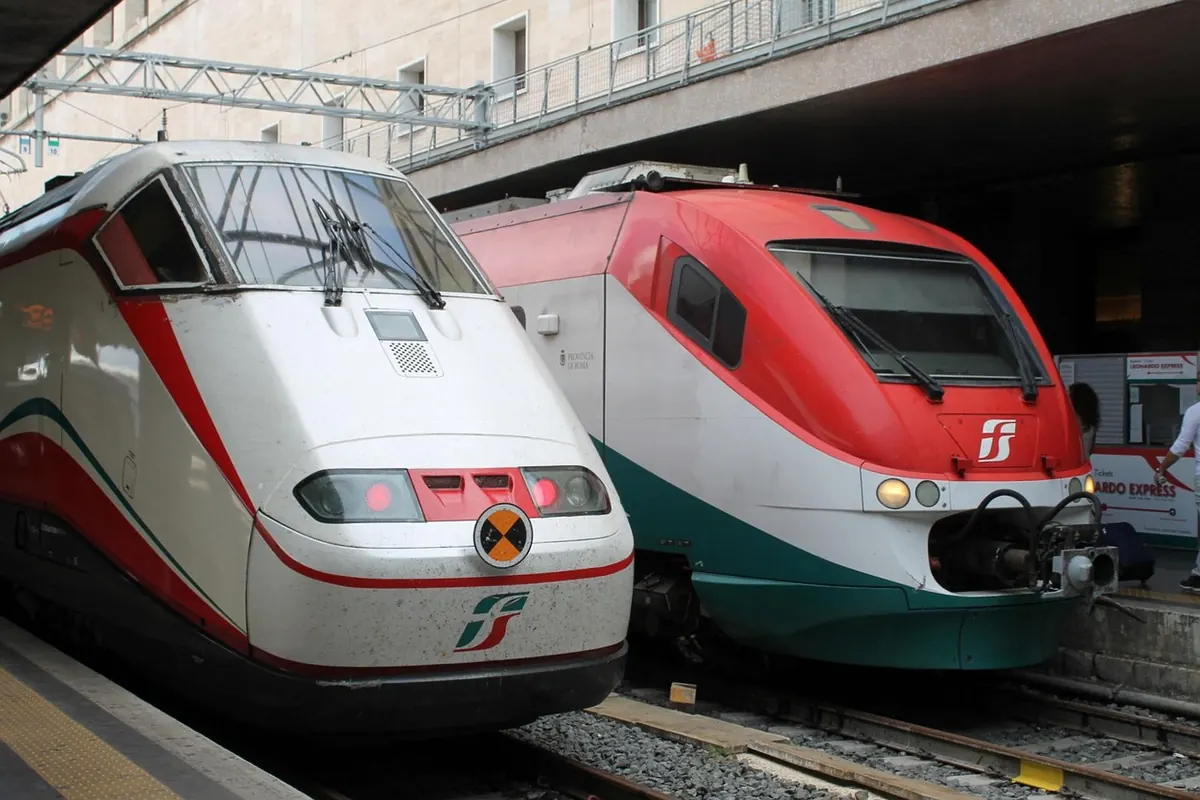
Nobody weighs your luggage on a Frecciarossa. But nobody finds space for a large suitcase either, because the racks fill up on busy departures and the space at the end of the carriage is first come, first served. Think of it less as a rule to obey and more as a way of guaranteeing you never have to stand in the aisle guarding a bag for two hours.
The route: Rome, Florence, Venice
Run the route in one direction and resist the urge to add a fourth city. Three nights in Rome, two in Florence, two in Venice gives you two full days in each of the first two cities and a full day plus a morning in the last — enough for one big sight and one long wander per day.
- Days 1–3, Rome. Base yourself near Termini or Monti if you want the train station on foot; Trastevere if you prefer evenings to be the highlight and don't mind a tram or a taxi on departure morning.
- Morning of day 4, Rome to Florence. High-speed trains take roughly an hour and a half from Roma Termini to Firenze Santa Maria Novella. Book a departure around 9am and you still have the afternoon in Florence.
- Days 4–5, Florence. Santa Maria Novella is a ten-minute walk from the Duomo, which is exactly why the carry-on plan works here.
- Morning of day 6, Florence to Venice. About two hours to Venezia Santa Lucia, the station that sits on the canal inside the city. Get off here, not at Mestre, unless your hotel is genuinely on the mainland.
- Days 6–7, Venice. Keep the last night in Venice itself so the final morning isn't a scramble back across the bridge.
Book Rome–Florence and Florence–Venice as two separate tickets. Direct Rome–Venice trains exist, but taking them means skipping the middle of the trip.
Booking the trains before you leave
Two operators run these routes — Trenitalia and Italo — and both sell through their own websites and apps. Compare the two for each leg; prices and timings differ, and the difference is often worth a few minutes of clicking. Buying through a third-party reseller adds a layer of fees and makes changes harder if something goes wrong.
Fares and tickets
- Book early for the cheapest high-speed fares. The discounted tiers on both operators are limited in number and usually non-refundable or changeable only for a fee; flexible fares cost noticeably more.
- Seat reservations come with high-speed tickets. Regional trains don't have them, and if you end up with a paper regional ticket, validate it in the machine on the platform before boarding.
- Digital tickets are enough. You'll get a booking code by email; keep it available offline, since station wi-fi is unreliable in the minutes you need it.
- Standard class is fine for journeys of one and a half to two hours. Save the upgrade money for dinner.
Allow a buffer if you're connecting to a flight or a booked tour. A 20-minute connection across a big station like Termini is not a connection, it's a gamble.
What actually goes in the bag
Pick one bag — a 38–45 litre backpack or a small cabin roller — and treat that number as fixed. Backpacks are better on stairs and bridges; rollers are better on the flat, long concourses of Termini. Either works if you can carry it comfortably.
Build a capsule wardrobe in one colour family so everything matches. Then plan on doing one wash mid-trip: a sink, a travel detergent sachet and a heated towel rail will do it, or find a laundromat in Florence on day five.
- Three bottoms, four tops, one light jacket and one slightly smarter layer for evenings
- Underwear and socks for four days, not seven
- Two pairs of shoes maximum: the pair you wear on the train and one packable pair
- Toiletries decanted into small bottles; buy sunscreen and shampoo there if you're short on space
- One charger with multiple ports and a plug adapter — Italy uses the two-round-pin sockets that accept standard European plugs
- A foldable tote or small daypack for daytime wandering
- Passport or ID, booking confirmations saved offline, and a card plus some cash for the places that don't take cards
- Blister plasters and any medication you rely on, in its original packaging
The trick is removing the "just in case" items. A week in three cities on a rail line does not require a third pair of shoes or a second jumper. Hotels provide towels and hairdryers; pharmacies exist on every second corner.
Habits for the moving mornings
Pack the night before and leave one complete outfit on top of the bag. Aim to be on the platform 20 minutes before departure, and closer to 30 at Termini, where the walk from the entrance to your platform can be long. Keep a small bag with passport, phone, wallet and tickets on your lap or under the seat, and put the main bag in the rack above you or at the carriage end. Don't leave anything valuable in the end-of-carriage rack, and don't accept help with your bag from someone who then expects payment.
Check the station name on your ticket twice. Firenze Santa Maria Novella is central; Campo di Marte is not. Venezia Santa Lucia is on the island; Mestre is across the water. Getting off one stop too early or too late with a heavy bag is precisely the scenario you're trying to avoid.
Before you book anything
Do a test pack a week in advance, walk around the block with the bag, and see whether you'd happily carry it up three flights. Book the two train legs as soon as your dates are fixed, choose hotels within walking distance of the stations, and keep the itinerary to three bases. Then read your travel insurance policy properly before you go — cancellation cover and baggage limits vary more than people expect, and it's worth knowing what you've actually bought.
Photo: 4666192 / Pixabay